I restore these on weekends and sell them on weekdays, which means I have opinions about which problems are worth having. The good news for anyone about to buy a Krisana Park Wolff or a Table Mesa Wagener is that mid-century houses were, on the whole, built honestly. The bad news is that the specific ways they fail are expensive and are not what a general inspector is looking for.
The roof deck is the whole question
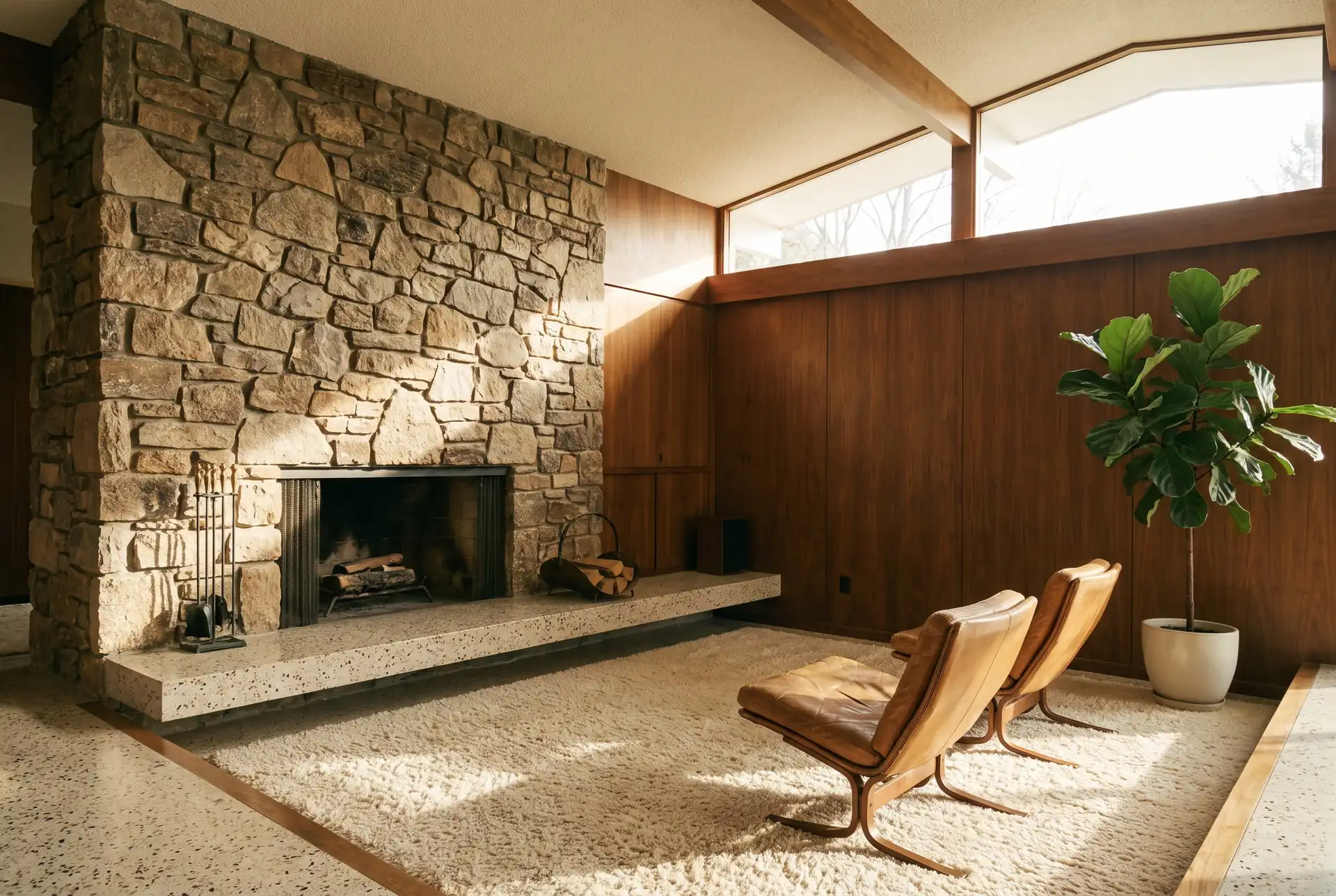
A post-and-beam house has no attic and no truss. The tongue-and-groove decking you see from inside is the roof structure, and it is also the ceiling. That is why the interiors are so good and it is why a leak is a structural event rather than a stain.
What to look for: any sag between beams, any darkening at the perimeter, any spot where a previous owner has added a skylight or a mechanical penetration. A skylight cut into a post-and-beam deck by someone who did not understand the load path is the single most expensive thing I find in these houses. Get a structural engineer up there before your inspection deadline, not after. It costs a few hundred dollars.
Verdict: a five-figure problem, and a legitimate reason to walk.
Radiant slab heating
Many of these houses heat through copper or steel tubing embedded in a concrete slab. When it works it is the best heat there is. When a loop fails, you are opening the floor.
Ask whether the system has been re-zoned or partially abandoned, and whether the boiler is original. A system that has been converted to PEX in a new topping slab is fine and often better. A system running on original 1955 copper with no service history is a bet. 1275 S Jasmine had its slab re-zoned in 2020 with the scope on file, and that document is worth real money to a buyer.
Verdict: a bargaining chip if undocumented, fine if it has been addressed.
Single-pane clerestory glazing
The clerestory band is the reason to own the house. It is also, in its original form, a single sheet of glass in an aluminium frame with no thermal break, and it will be the coldest surface in Colorado in January.
Replacing it correctly — matching the profile, keeping the sight lines, insulated glazing — is achievable and costs what you would expect. Replacing it badly destroys the thing you bought. 1855 Kohler Drive had its windows replaced in 2021 with a matched profile and it is the reason that house prices where it does.
Verdict: budget for it, do not discount the house for it, and do not let anyone put vinyl in.
Original electrical
Sixty-amp service, two-prong outlets, possibly cloth-sheathed wiring, occasionally aluminium branch circuits from a 1960s update. None of this is dangerous in the abstract and all of it is a problem for your insurer.
A service upgrade to 200 amps with a new panel is a known quantity. Rewiring a post-and-beam house with no attic and no basement, on the other hand, means opening finishes. Ask what is accessible before you assume a number.
Verdict: a bargaining chip. Get a quote during the inspection period.
Things that look alarming and are not
- Hairline cracks in a slab. Nearly universal, nearly always cosmetic. Look at width and displacement, not presence.
- Original kitchens and baths. Frequently the most valuable rooms in the house to the buyer who wants what you want. Do not price them as a renovation you must do.
- Small bedrooms. They were designed to be small so the living space could be generous. That was the point.
- No insulation in the roof. Addressable from above with a new membrane and rigid insulation, without touching the interior deck.
The thing nobody tells you
The market for intact mid-century is not the general market. It is a small number of buyers who know exactly what they are looking at, and they pay a premium for originality — which means that every "improvement" you make away from the original is a subtraction at resale. If you want an open-plan kitchen island, buy a house that already has one. If you want the Wolff, buy the Wolff and leave it alone.
There are currently three Krisana Park houses on this site, and I am happy to walk any of them with you and tell you what is wrong with it.
This article is general information about the Colorado residential market, not legal, tax or financial advice, and it is published on a demonstration website for a fictional brokerage. Consult your own attorney, accountant and lender before acting on anything in it.